
Nightly restaurant cleaning
A nightly schedule resets restrooms after closing so fixtures, mirrors, waste receptacles, dispensers, and floors are ready for the next opening.
Serving Detroit, Michigan & surrounding areas
Open 24/7
Restaurant restroom cleaning · Detroit
Keep guest and employee facilities fresh, stocked, and ready for service with a cleaning schedule built around your operating hours.
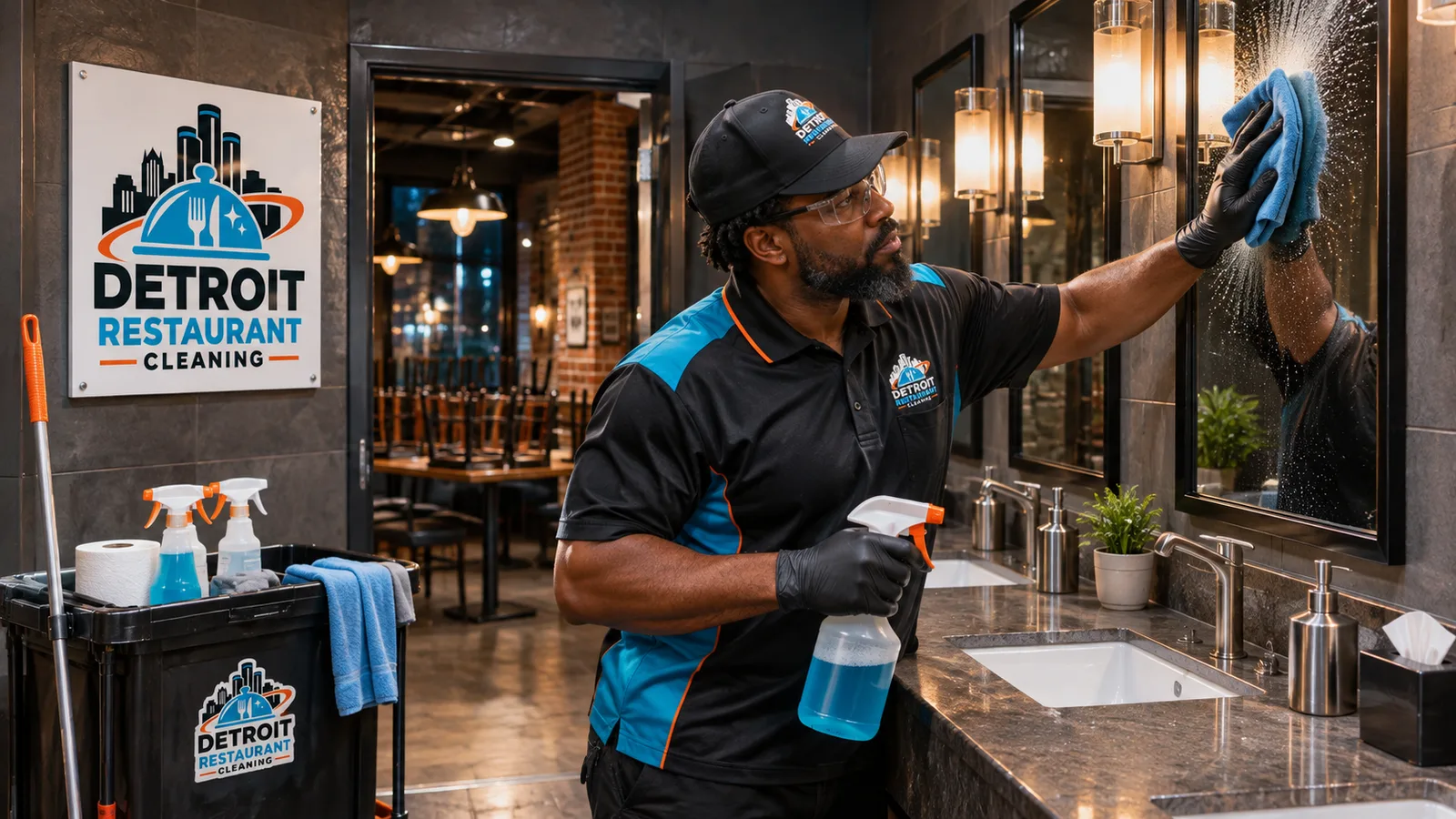
Detailed restroom care after service
Restaurant Restroom Cleaning requires more than a quick wipe of the sinks. Odors, fingerprints, water spots, overflowing waste, depleted dispensers, and dirty floors can shape a guest's opinion before the meal is finished. Detroit Restaurant Cleaning provides recurring restroom care that addresses fixtures, touchpoints, floors, waste, supplies, and the small details guests notice.
Working as a professional restaurant company in Detroit, MI, our team builds the scope around restroom traffic, operating hours, fixture count, and the condition expected at opening. A dining room near a busy event destination may need a different frequency than a neighborhood restaurant with predictable meal periods. The written plan identifies what is cleaned, when the work occurs, and which consumable supplies your staff wants monitored.
Detroit weather also affects the work. Winter salt and gray slush can track across restroom floors, while rainy periods increase wet footprints near entrances and sinks. Scheduled floor care helps limit film, soil buildup, and slippery residue. The result is a restroom that is prepared for guests rather than merely tidied after the last shift.
Fixtures, floors, and supplies
A practical scope starts with high-contact and high-visibility surfaces. Crews clean and disinfect toilets, urinals, flush handles, partitions, door hardware, faucet handles, counters, sinks, and dispensers. Mirrors are cleaned without streaks, waste is removed, liners are replaced, and visible soil is cleared from walls or partitions within the agreed scope.
Floors are swept or dust mopped before wet cleaning so loose debris does not turn into muddy residue. The appropriate cleaner depends on the flooring and soil load. Grout, corners, edges, and the areas around toilet bases need periodic detail work because routine mopping alone can leave buildup behind. Cleaning chemicals should be used at the label dilution and remain wet for the product's stated contact time when disinfection is required.
Restocking can include toilet tissue, hand towels, soap, and sanitary disposal liners when supplies are available on the premises. Crews can also report leaks, loose dispensers, damaged partitions, persistent drain odors, or exhausted inventory. Cleaning does not replace plumbing, pest control, or mechanical repair, but prompt reporting helps managers address those issues before the next rush.
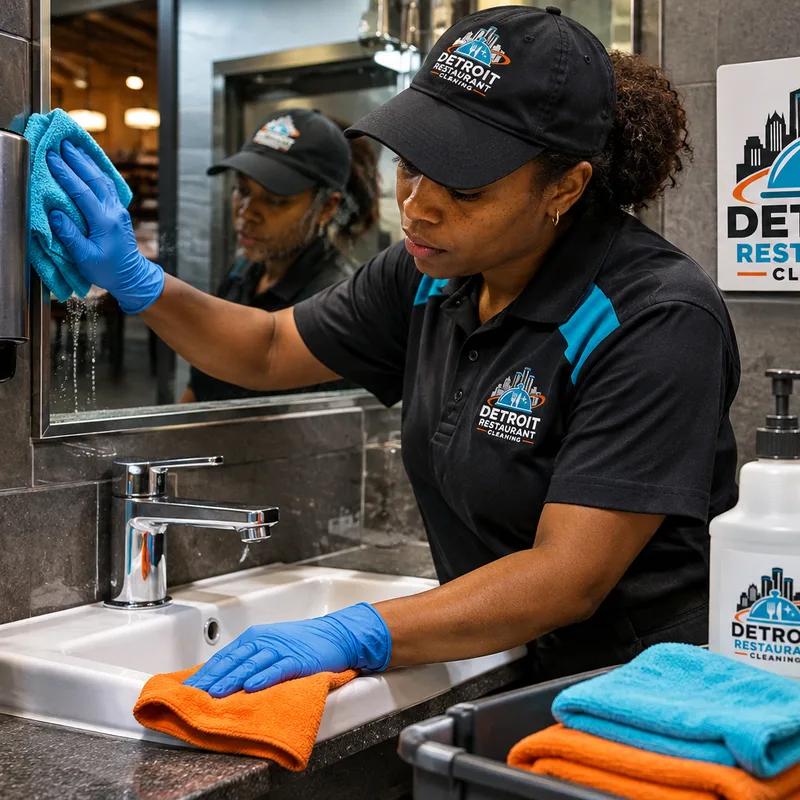
Flexible recurring care
A nightly schedule resets restrooms after closing so fixtures, mirrors, waste receptacles, dispensers, and floors are ready for the next opening.
Daily service suits restaurants that need a dependable reset on each operating day. The scope can account for weekends, event traffic, and changing hours.
Overnight Restaurant Cleaning keeps janitorial activity outside guest service periods. Access instructions, alarm procedures, locking duties, and completion expectations are documented before work begins.
Recurring Restaurant Cleaning follows a defined checklist and frequency. Detail tasks such as grout scrubbing, partition washing, and floor-edge cleaning can be rotated without losing the daily basics.
Crews can check agreed dispensers and restock customer-provided consumables. Low inventory or broken hardware is reported to the designated restaurant contact.
Back-of-house and employee facilities can be included in the same visit with a scope suited to their traffic, floor type, fixtures, and access.
From walkthrough to review
We review the number of restrooms and fixtures, floor materials, current buildup, supply storage, access, and the condition expected after each visit.
The written scope separates every-visit duties from periodic detail work. It can also identify consumables to monitor, areas excluded from service, and the method for reporting maintenance concerns.
Restaurant Night Cleaning may begin after closing, while overnight work can be completed before opening. The schedule accounts for late service, weekends, and approved building access.
Crews follow the agreed sequence, secure the facility as instructed, and communicate exceptions. Routine reviews allow the checklist to change when traffic, hours, or restroom conditions change.
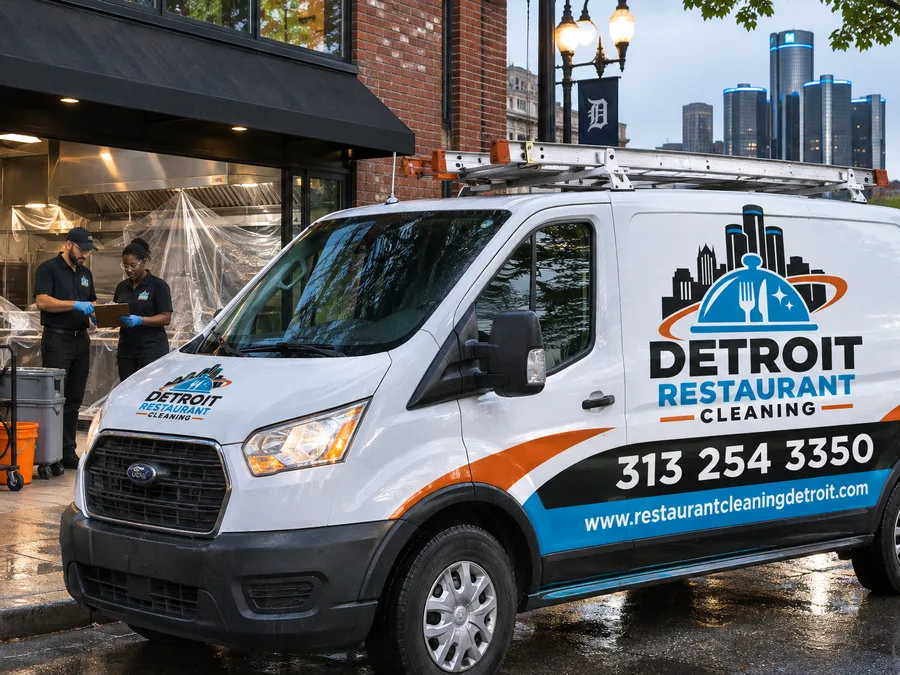
Local scheduling needs
Restaurant Janitorial Services Detroit must account for the way individual districts operate. Downtown restaurants can face sharp traffic changes around games, concerts, and conventions. Greektown locations often operate late, so overnight access and a dependable completion time matter. Corktown dining rooms may combine compact guest areas with limited storage, which makes an organized supply plan useful. Restaurants in Midtown can experience traffic tied to cultural institutions, medical facilities, and evening events.
These operating patterns affect scheduling, but the cleaning standard remains specific to each facility. Fixture count, guest volume, restroom layout, floor condition, closing procedure, and supply responsibilities all belong in the scope. A Restaurant Janitorial Company should also clarify who provides chemicals and paper goods, where supplies are stored, how keys or access codes are handled, and who receives issue reports.
For businesses near the Detroit River, winter moisture and deicing residue carried indoors can create visible floor film. Crews should use floor chemicals compatible with the installed surface and avoid leaving excess solution around toilet bases, thresholds, or grout lines. Clean, dry floors and fully stocked dispensers are basic opening conditions, not optional finishing touches.
Verifiable service standards
Reliable service depends on a scope that both the restaurant and cleaning crew can verify. Every-visit duties commonly include fixture cleaning, disinfection of designated touchpoints, mirror and counter care, waste removal, liner replacement, floor cleaning, and dispenser checks. Periodic tasks may include grout agitation, partition washing, floor-edge detailing, vent dusting, wall spot cleaning, and treatment of mineral or soap buildup where the surface permits it.
Cross-contamination controls should be part of the working method. Color-coded cloths or tools can keep toilet-area equipment separate from sink and counter surfaces. Products should never be mixed, and Safety Data Sheets should be available for chemicals used on the premises. A disinfectant only works as intended when the surface remains visibly wet for the contact time stated on its label.
Restaurant management should identify restricted areas, alarm instructions, key control, preferred waste routes, and the person authorized to approve scope changes. We document those details before recurring work begins. That preparation gives managers a clear standard for evaluating Restaurant Janitorial Cleaning and gives crews a repeatable plan for every visit.
Get a written restroom cleaning scope based on your fixtures, traffic, operating schedule, floor materials, and restocking needs.
Call for a Free QuoteScope and scheduling
Pricing is normally based on the complete recurring scope rather than a flat restroom rate. Fixture count, restroom size, service frequency, current buildup, floor type, consumable duties, after-hours access, and periodic detail work all affect the quote. A compact restroom receiving nightly maintenance takes less time than several high-traffic facilities needing grout restoration or heavy initial cleaning. Detroit Restaurant Cleaning reviews the facility and confirms the exact price in a written scope.
Yes, Restaurant Night Cleaning can be scheduled after closing or during an approved overnight window. The plan should state the earliest entry time, required completion time, alarm procedure, locking duties, and contact process for access problems. Late operating hours in districts such as Greektown may make an overnight schedule more practical than work immediately after the dining room closes.
Nightly service is usually the better fit when the restaurant operates every day and expects a full restroom reset before each opening. Daily Restaurant Cleaning can also mean service on selected operating days, depending on the written schedule. Guest traffic, weekend hours, event demand, and the restaurant's own daytime restroom checks should determine the frequency.
Yes, restocking can be included when the agreed consumables are available in an accessible storage area. The scope should name each dispenser, identify who purchases supplies, and establish how low inventory is reported. Crews can report a loose or broken dispenser, but replacement and repair require separate approval.
The start date depends on the walkthrough, approved scope, service frequency, access arrangements, and whether an initial deep cleaning is needed. A facility with heavy grout buildup, persistent odor, or neglected floor edges may need corrective work before routine service can maintain the expected condition. Scheduling is confirmed after the Detroit facility has been reviewed.
Yes, guest and employee restrooms can be assigned to one visit with separate checklist details when their conditions differ. Back-of-house facilities may have different flooring, traffic, access, or storage constraints. Including every fixture and room in the walkthrough prevents missed areas and supports accurate labor planning.
The crew can document and report visible leaks, damaged fixtures, loose hardware, or persistent odors to the designated restaurant contact. Janitorial cleaning may remove surface soil that contributes to odor, but it does not repair plumbing or correct a dry trap, blocked drain, or sewer issue. Fast reporting allows restaurant management to send the concern to the appropriate trade.
Plan recurring service
Tell us about your operating hours, restroom layout, current concerns, and preferred service frequency. We will outline a practical recurring plan for nightly, daily, or overnight cleaning.