Restaurant cleaning · Dearborn

Restaurant Cleaning in Dearborn

Keep your kitchen, dining room, restrooms, and staff areas ready for every shift with a cleaning plan built around your hours and facility.

✓ Written cleaning scope
✓ Area-specific tools
✓ Planned around operations
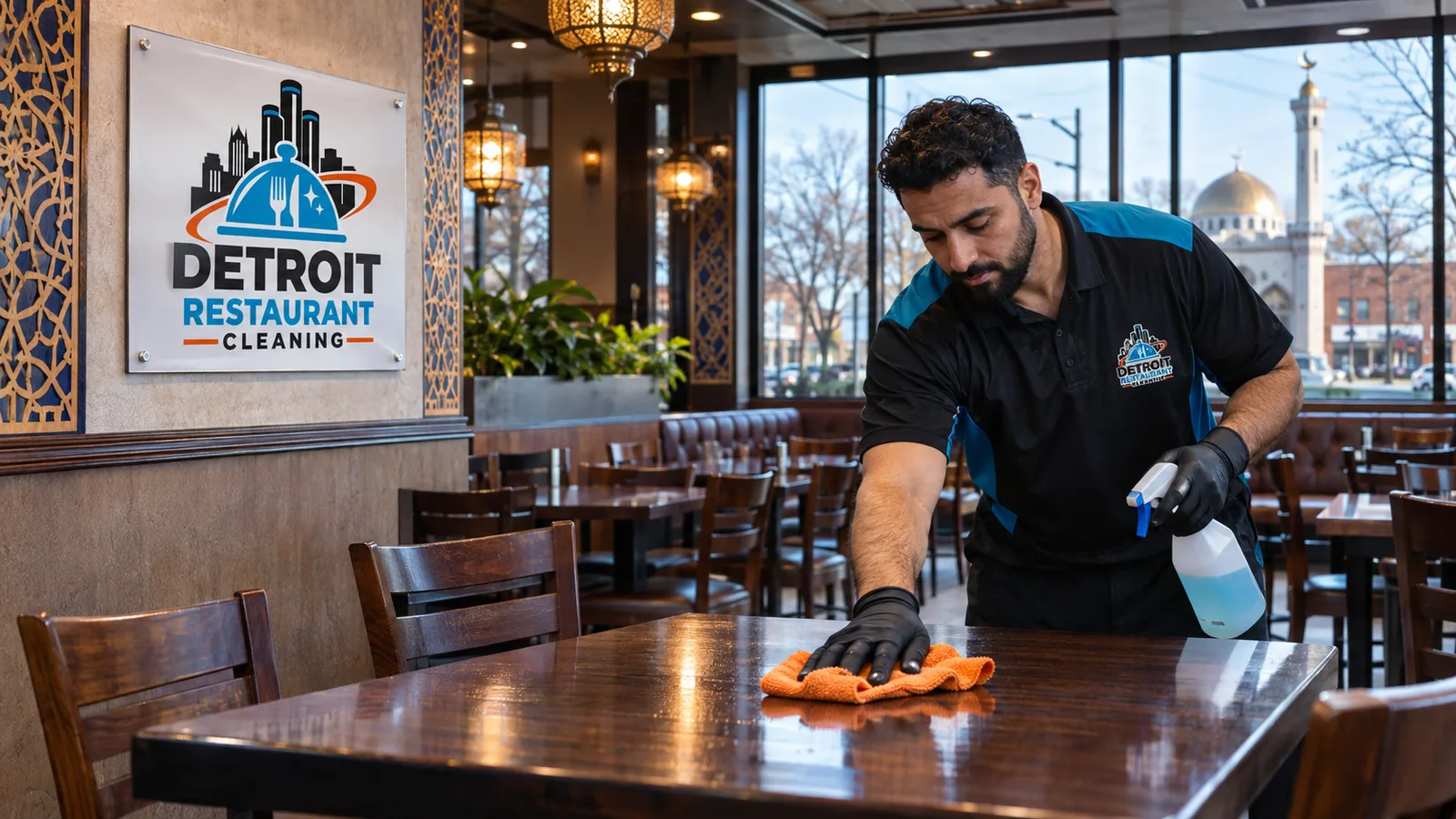
A professional cleaner sanitizing tables in a polished Dearborn restaurant dining room while the business is closed

Dining-room care scheduled around your service hours

Dependable Restaurant Cleaning Dearborn Operators Can Schedule Around Service

Restaurant Cleaning Dearborn businesses can depend on starts with a written scope, a practical schedule, and clear priorities for every part of the facility. Detroit Restaurant Cleaning handles recurring care for dining rooms, kitchens, restrooms, entrances, staff areas, and other agreed spaces. We plan the work around opening, closing, deliveries, and prep so cleaners do not interfere with guests or kitchen production.

Our approach separates cleaning from sanitizing. Cleaning removes food residue, grease, soil, and debris. Sanitizing follows on appropriate food-contact surfaces after they have been cleaned, using the product's required concentration and contact time. Staff use area-specific tools to reduce cross-contamination, with restroom cloths and equipment kept away from kitchen and dining areas.

Working as an experienced restaurant team in Detroit, MI, we understand the operating demands shared by restaurants across Dearborn and the surrounding metro area. Our business is based at 1370 Franklin St, Suite 5 in Detroit, which puts our team close enough to coordinate regular service without treating Dearborn as a distant stop. Tell us your hours, floor types, problem areas, and inspection priorities. We will use those details to shape the scope.
Request a Callback

Facility-wide scope

What a Restaurant Cleaning Plan Can Cover

Dining Rooms and Guest Areas

Tables, chairs, booths, ledges, host stations, partitions, and other agreed touchpoints are cleaned with attention to crumbs, fingerprints, spills, and buildup. Hard floors can be vacuumed, swept, or damp mopped according to their material and finish.

Kitchen Floors and Non-Food-Contact Surfaces

Service can address floor soil, splash areas, exterior equipment surfaces, shelving exteriors, doors, handles, and other accessible areas listed in the scope. Heavy grease, equipment interiors, and hood systems should be identified separately because they require different methods.

Entrances and High-Traffic Paths

Entry glass, door hardware, mats, and traffic lanes collect tracked-in grit quickly. Michigan snow, slush, road salt, and wet weather can increase floor-care needs during colder months, especially around entrances and pickup areas.

Staff and Back-of-House Areas

Break spaces, corridors, storage-area floors, locker areas, and employee restrooms can be included. Clear boundaries protect stored food, packaging, chemicals, and personal items during cleaning.

Waste and Spot Response

Trash and liner replacement can be assigned by area, along with spot cleaning for visible spills and soil. Waste handling expectations should state where bags are placed and which receptacles are included.

Scheduled Detail Work

Baseboards, vents, chair legs, wall spots, corners, and other buildup-prone areas can rotate through a periodic detail list. This keeps the nightly checklist manageable while preventing neglected edges.

Request a Callback

Guest-facing hygiene

Restaurant Bathroom Cleaning in Dearborn

A restaurant restroom affects guest confidence immediately. Our Restaurant Bathroom Cleaning Dearborn service can include toilets and urinals, sinks, counters, mirrors, partitions, dispensers, door hardware, floors, and agreed wall surfaces. The work begins with soil and residue removal. An appropriate disinfectant is then applied to compatible high-touch surfaces and left wet for the label's stated contact time.

Restroom tools are kept separate from tools used in kitchens and dining rooms. Cleaners should work from cleaner surfaces toward more contaminated fixtures and use fresh materials as needed instead of spreading soil around the room. Floors receive special attention near fixtures, corners, partition supports, and doorways, where odor-causing residue and tracked moisture can collect.

Supplies and cleaning are different responsibilities, so the scope should state who monitors soap, paper products, and liners. It should also identify recurring concerns such as drain odors, hard-to-reach edges, heavy evening traffic, or a restroom that needs attention more than once during operating hours. A clear checklist makes accountability easier for managers and cleaning staff.

Request a Callback
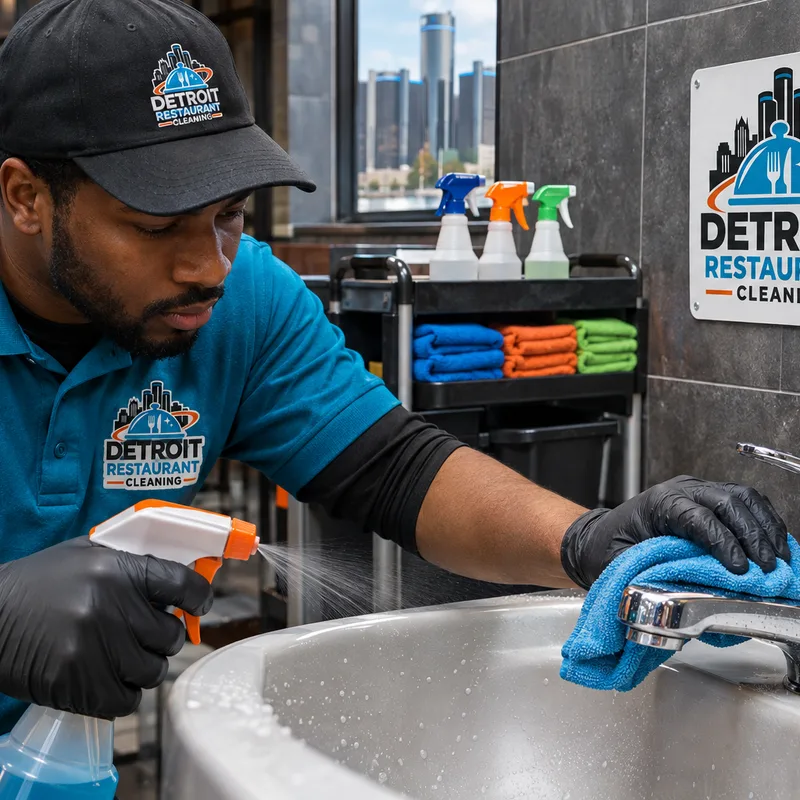
A restaurant cleaner wearing gloves disinfecting a restroom sink and faucet with separate color-coded restroom supplies visible on the cart
Separate restroom supplies help reduce cross-contamination between facility areas.

From walkthrough to review

How We Build and Run Your Cleaning Program

  1. 01

    Walk Through the Facility

    We review the dining room, kitchen access, restrooms, entrances, staff spaces, floor materials, waste points, and any areas excluded from routine service. Managers can point out recurring trouble spots and explain when each area becomes available.

  2. 02

    Define the Scope and Frequency

    The written scope lists tasks by area and separates routine work from periodic detail cleaning. Frequency may vary within one restaurant. Restrooms and entrances can need more attention than a low-traffic office or storage corridor.

  3. 03

    Set Access and Safety Procedures

    We document entry instructions, alarm expectations, key control, chemical storage, wet-floor precautions, and closing contacts. Cleaning products must be used according to their labels, and Safety Data Sheets should remain available for workplace chemicals.

  4. 04

    Complete and Check the Work

    Cleaners follow the agreed checklist and report access problems, damage, leaks, pest evidence, or maintenance concerns they notice. These observations help management address facility issues that cleaning alone cannot correct.

  5. 05

    Adjust as Operations Change

    Seasonal traffic, menu changes, private events, renovations, and new operating hours can alter cleaning needs. Periodic reviews keep the schedule and task list aligned with actual restaurant conditions.

Request a Callback
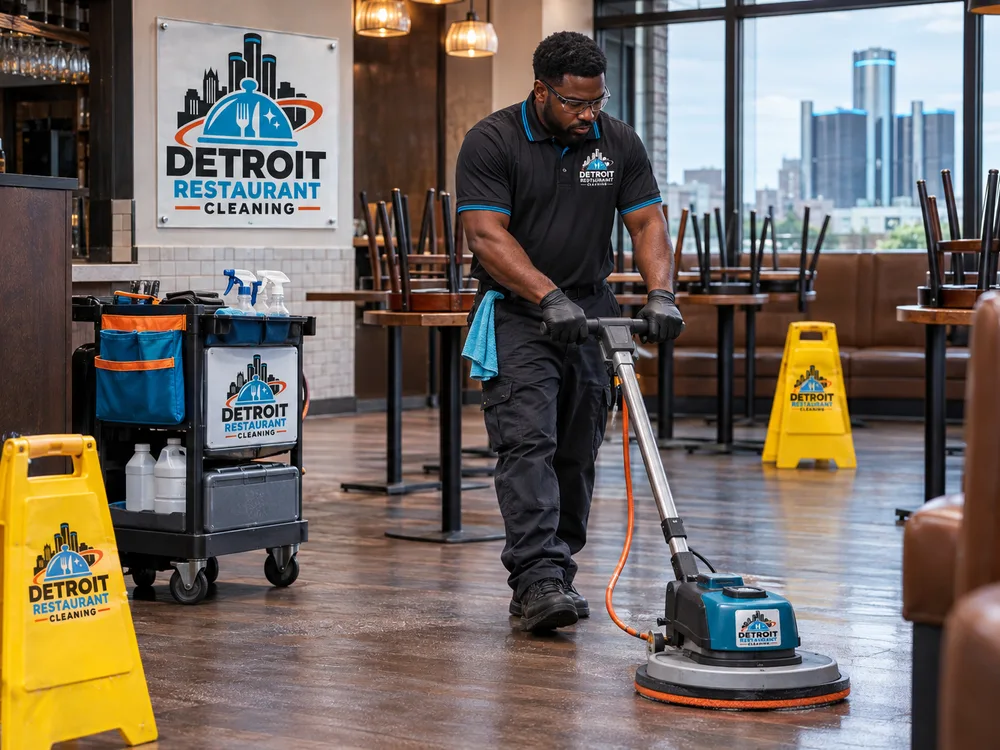
A restaurant cleaning professional using a low-moisture floor method in a closed dining area, with caution signs and neatly arranged equipment
Floor methods are selected for the material, finish and available drying window.

Surface-aware care

Cleaning Methods Matched to Restaurant Surfaces

Restaurant surfaces cannot all be treated the same way. Stainless steel benefits from nonabrasive cleaning in the direction of the grain. Finished wood, laminate, tile, resilient flooring, sealed concrete, and glass each need compatible products and tools. Using excessive chemical, leaving floors too wet, or applying an unsuitable degreaser can damage finishes and create avoidable slip or residue concerns.

Food-contact surfaces require particular care. They must be cleared and cleaned before sanitizing, and the sanitizer must be suitable for that use. Product labels control dilution, contact time, rinsing instructions, and surface compatibility. Cleaning crews should never mix chemicals, especially products containing bleach with ammonia or acids.

Dearborn restaurants near Michigan Avenue may deal with frequent entry traffic and quick turnover, while businesses near the Ford Rouge complex can have shift-driven meal periods. Restaurants serving busy commercial areas along Warren Avenue may also need cleaning timed around later dining and carryout activity. Those operating patterns matter because the right service window is the one that provides access without interrupting staff or guests.

Request a Callback

Defined responsibilities

A Clear Scope Protects Your Operation

A useful proposal should say what is cleaned, how often it is cleaned, and what falls outside routine service. It should distinguish nightly tasks from weekly or periodic work and note whether the restaurant or cleaning provider supplies consumables. Access times, alarm procedures, equipment restrictions, and responsibility for moving chairs or small items should also be settled before service begins.

Some jobs need specialized contractors or a separate scope. Commercial kitchen exhaust hood and duct cleaning, pest control, grease-trap pumping, mold remediation, and repair work are not interchangeable with routine janitorial cleaning. Likewise, cleaners should not move hot equipment, disconnect gas appliances, or enter unsafe spaces simply to reach hidden soil. Identifying these boundaries protects the restaurant, its staff, and the cleaning crew.

Quality control works best when it is specific. Instead of relying on a general instruction to make the restaurant look clean, managers can review defined results: corners are free of loose debris, mirrors have no visible streaks, restroom fixtures have been cleaned and disinfected, and floors are dry before staff reenter. When something misses the standard, a documented communication process makes correction straightforward.

Request a Callback

Get a cleaning scope built around your restaurant's hours, traffic patterns, floor materials, restroom needs, and closing routine.

Call for a Free Quote

Scope and scheduling

Questions About Restaurant Cleaning in Dearborn

How much does restaurant cleaning cost in Dearborn?

Restaurant cleaning is usually priced after a walkthrough because square footage alone does not show the actual workload. The quote depends on service frequency, kitchen grease levels, number of restrooms, floor materials, operating hours, access, waste duties, and periodic detail tasks. A compact dining room with light back-of-house work requires a different plan than a high-volume facility with late closing hours. Detroit Restaurant Cleaning confirms the exact price after reviewing the Dearborn location and agreeing on a written scope.

Can cleaning take place after the restaurant closes?

Yes, service can be planned for after closing when access, alarm procedures, and a realistic work window are arranged in advance. The schedule should account for guests leaving, kitchen shutdown, staff finishing side work, and the time floors need to dry. Restaurants with late service or shift-driven traffic near major Dearborn employment centers may need a later start or a carefully staged cleaning sequence.

How often should a restaurant restroom be cleaned?

The right frequency depends on guest volume, hours, fixture count, and how often employees can inspect the room during service. A professional crew may complete the main cleaning after closing, while restaurant staff handle documented checks, supply restocking, spills, and urgent concerns during operating hours. High-touch fixtures and visibly soiled areas should receive attention based on actual use rather than a fixed assumption.

Do you clean commercial kitchens as well as dining rooms?

Yes, accessible kitchen floors and agreed non-food-contact surfaces can be included in the restaurant cleaning scope. The walkthrough should identify equipment that cannot be moved, hot or energized surfaces, food storage restrictions, and areas requiring specialized work. Hood and duct cleaning, grease-trap service, and equipment repair are distinct jobs and should be assigned separately.

Can you use our restaurant's approved cleaning products?

Product requirements can be discussed during the walkthrough and documented before work begins. Any product must be appropriate for the surface and task, used according to its label, and supported by accessible Safety Data Sheets. If your operation has manufacturer requirements for flooring, stone, stainless steel, or other finishes, provide them before service so the cleaning method can be matched to those materials.

How quickly can recurring service begin?

The start date depends on walkthrough availability, scope approval, access arrangements, staffing, and the requested schedule. A restaurant with straightforward after-hours access may be easier to schedule than one requiring keys, alarm coordination, restricted kitchen entry, or several service visits per day. The practical next step is to provide your Dearborn address, operating hours, approximate facility size, and preferred frequency for review.

Plan your Dearborn service

Ready for a Cleaner Restaurant at the Start of Every Shift?

Tell Detroit Restaurant Cleaning about your dining room, kitchen access, restrooms, schedule, and recurring problem areas. We will discuss the scope and outline a practical cleaning plan for your Dearborn restaurant.