Restaurant cleaning · Warren

Restaurant Cleaning Warren

Detailed kitchen and equipment cleaning planned around your operating hours, facility needs, and food-service workflow.

✓ Written cleaning scope
✓ One-time or recurring work
✓ Planned around operations
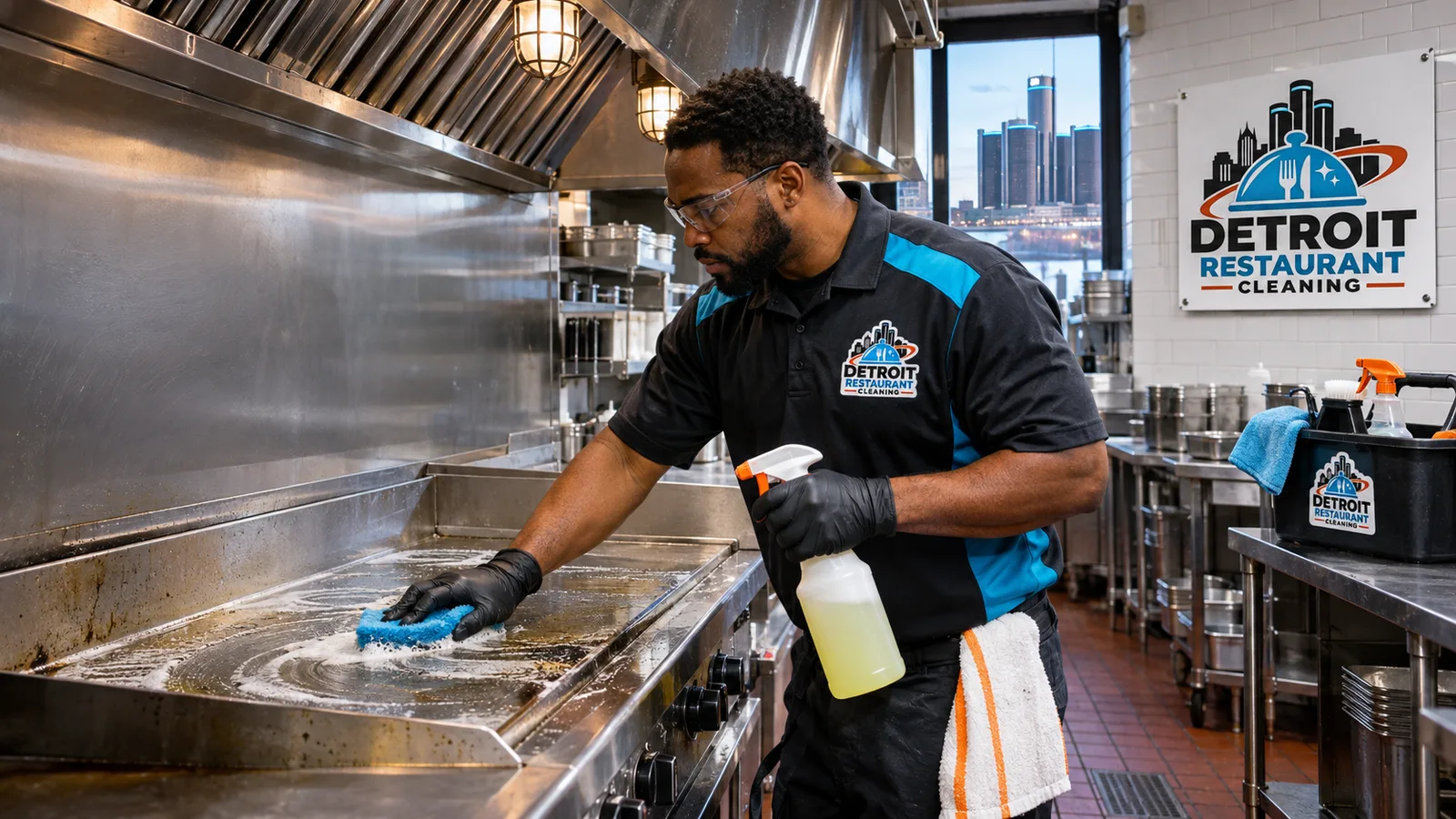
A restaurant cleaning technician degreasing stainless steel cooking equipment in a clean Warren commercial kitchen after service

Equipment care planned around your service schedule

Commercial Kitchen Cleaning Built Around Your Operation

Restaurant Cleaning Warren should make the kitchen easier to inspect, maintain, and prepare for the next shift. Detroit Restaurant Cleaning develops a written scope based on your equipment, surfaces, buildup, access, and operating schedule. Work can focus on a one-time deep clean, recurring sanitation support, or selected equipment that needs concentrated care.

We clean the areas where normal closing duties often stop: behind and beneath movable equipment, around casters and legs, on splash zones, along wall-floor transitions, and across accessible exterior equipment surfaces. Grease, carbonized food residue, dust, and tracked soil require different products and methods. The cleaning plan accounts for surface compatibility, dwell time, agitation, rinsing, and drying rather than treating every area the same.

Based at 1370 Franklin St in Detroit, our team understands the scheduling demands of food-service businesses across the Detroit area and Warren. Every restaurant assignment is handled by a restaurant company Detroit homeowners rely on, with the same careful scoping and respect for the property, while adapting the work to commercial equipment and back-of-house conditions.

Request a Callback

Areas and equipment

What Restaurant Cleaning in Warren Can Cover

Cooking-Line Degreasing

Cleaning may include accessible exteriors, fronts, sides, backsplashes, ledges, control surrounds, equipment legs, and the floor beneath movable units. Technicians use methods suited to stainless steel and other manufacturer-approved surfaces.

Prep and Warewashing Areas

Prep tables, sinks, shelving, dish-area surfaces, splash zones, and nearby walls collect food residue, detergent film, and mineral deposits. The scope identifies which items must be cleared before work begins.

Floors, Edges, and Drain Areas

Commercial floors need soil removal at edges, under equipment, and around accessible drain surrounds. The method depends on the floor material, grease load, drainage, and whether standing water must be strictly controlled.

Cooler and Storage Surfaces

Accessible shelves, doors, handles, gaskets, walls, and floors can be addressed when food and inventory are removed or protected. Any temperature-sensitive shutdown must be approved and coordinated in advance.

Dining and Service Areas

A broader restaurant scope can include hard floors, tables, chairs, service stations, counters, touchpoints, and other customer-facing surfaces without disrupting kitchen production.

Scheduled Detail Cleaning

Recurring work targets the areas assigned on the cleaning schedule. A task matrix can separate nightly staff duties from weekly, monthly, or periodic professional cleaning.

Request a Callback

Controlled equipment care

Restaurant Equipment Cleaning Warren Kitchens Can Schedule With Confidence

Equipment cleaning starts with a clear boundary around what will and will not be opened, disconnected, moved, or disassembled. Removable racks, trays, guards, and grease pans may be cleaned when access is safe and the item is included in the scope. Gas connections, electrical components, fire-suppression equipment, and manufacturer-restricted assemblies are left to qualified personnel unless specific authorization and proper procedures are in place.

Degreaser is not suitable for every surface. Aluminum, painted finishes, plastics, rubber gaskets, polished stainless steel, and food-contact surfaces may require different chemistry or dilution. A knowledgeable cleaner follows product labels, observes required dwell time, prevents cross-contamination, and completes the specified rinse or wipe-down. Food-contact surfaces receive particular attention because residue from cleaning chemicals must be removed according to the product instructions.

For heavy soil, the practical sequence is dry removal, controlled chemical application, agitation, soil recovery, rinsing where appropriate, and thorough drying. This limits the chance of spreading greasy water into clean areas. Carbon buildup may need repeated treatment rather than aggressive scraping that could damage a finish.
Request a Callback
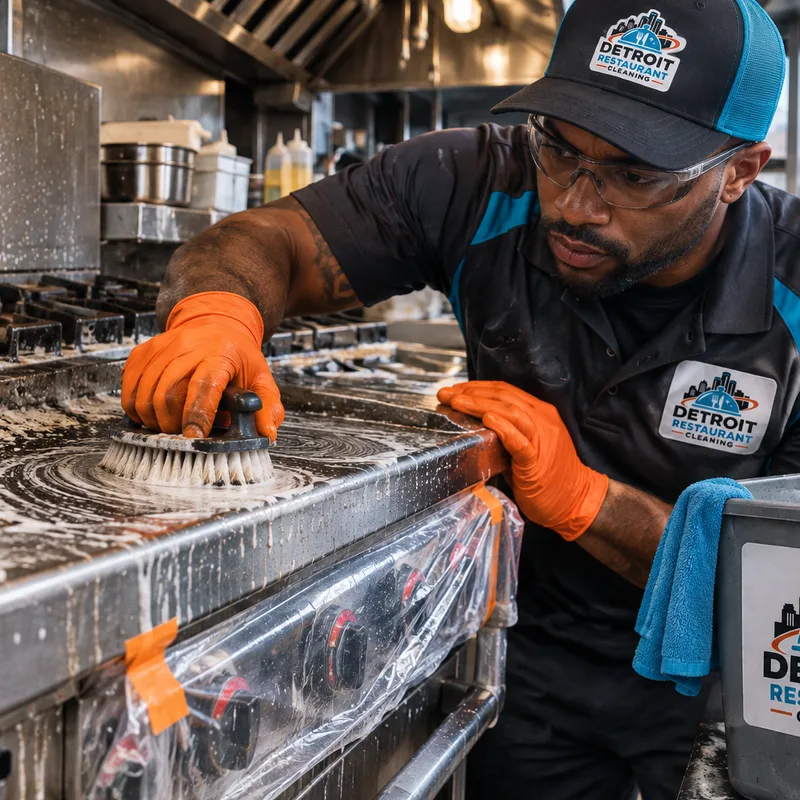
Close view of a technician using controlled degreasing and hand agitation on a stainless steel restaurant range, with electrical controls protected from moisture
Surface-specific products and controlled moisture protect commercial equipment during cleaning.

From walkthrough to review

How Our Restaurant Cleaning Process Works

  1. 01

    Walk Through the Facility

    We review the cooking line, prep and warewashing areas, storage spaces, dining room, access points, and shutdown limits. The walkthrough also identifies fragile finishes, fixed equipment, floor drains, and areas that staff must keep available.

  2. 02

    Define the Scope and Schedule

    The written scope lists included equipment and surfaces, exclusions, preparation duties, and the preferred service window. Warren restaurants near busy commercial corridors may need overnight or closed-day scheduling to keep deliveries and customer service moving.

  3. 03

    Prepare and Protect

    Food, utensils, smallwares, paper goods, and sensitive items are removed or protected as agreed. Cleaning technicians post wet-floor controls, separate tools by task, and protect electrical or moisture-sensitive components.

  4. 04

    Clean in a Controlled Sequence

    Work generally progresses from cleaner zones toward heavier soil and from higher surfaces toward floors. Used solution and loosened debris are contained, while tools are changed or cleaned to reduce cross-contamination between areas.

  5. 05

    Inspect and Document

    The final check compares completed work with the agreed task list. The restaurant contact can review access limitations, remaining maintenance concerns, and recommended timing for the next scheduled cleaning.

Request a Callback
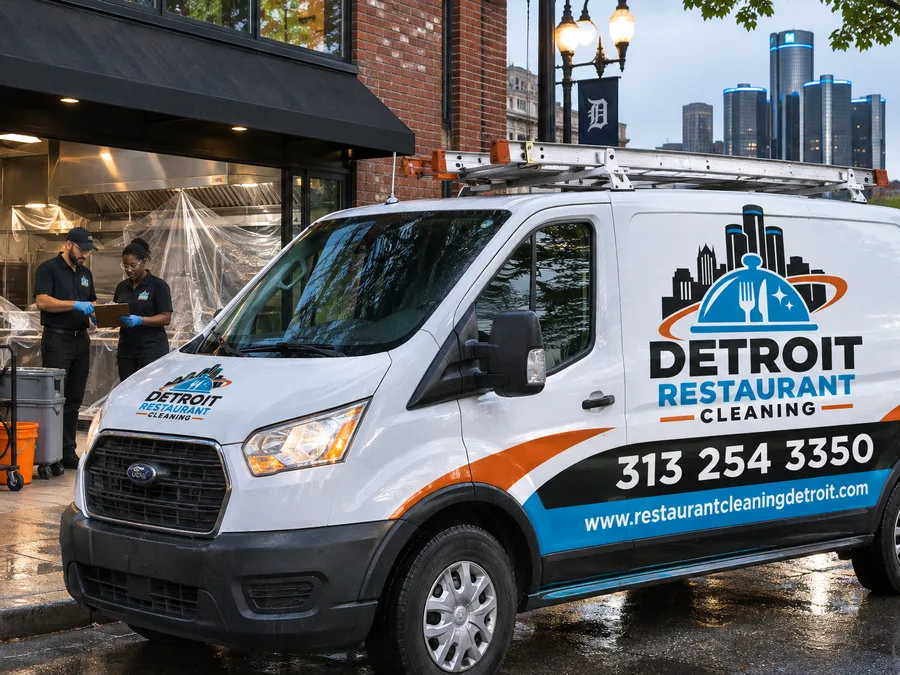
A clearly marked restaurant cleaning crew unloading floor-care and degreasing equipment at a Warren restaurant service entrance during an off-hours appointment
Off-hours staging helps protect restaurant access and workflow.

Local scheduling factors

Cleaning Plans for Warren's Restaurant Mix

Restaurant layouts and service patterns vary across Warren. Restaurants along Van Dyke Avenue often work around customer traffic, supplier deliveries, and compact service windows, so staging and access must be settled before the crew arrives. Operations near the General Motors Technical Center may have weekday meal peaks or business-related traffic that makes after-hours work more practical. Restaurants serving the residential areas around Warren City Square may need recurring plans that keep both dining and back-of-house spaces ready for steady local use.

Southeast Michigan winters add tracked salt, grit, and moisture at entrances and service doors. If that soil reaches kitchen floors, it can mix with grease and require more frequent edge, mat-area, and floor cleaning. Wet-weather scheduling also calls for careful equipment staging so cleaned components and tools are not carried through contaminated entry zones.

The City of Warren falls within Macomb County. Restaurant operators remain responsible for their own food-safety procedures and applicable regulatory requirements. Professional cleaning supports those procedures, but it does not replace employee handwashing, food-temperature controls, pest management, equipment repair, or required inspections.

Request a Callback

Clear preparation and access

What to Expect From a Written Cleaning Scope

A useful proposal identifies the rooms, equipment, and surface areas included in the work. It should also state whether the crew will move equipment, clean removable components, address food-contact surfaces, or handle dining-room floors. Access restrictions and customer preparation duties belong in writing.

Pricing and timing depend heavily on soil condition. A cooking line with recent routine maintenance is different from equipment with thick, carbonized grease behind fixed units. The number of appliances matters, but so do floor area, ceiling height, drain access, storage congestion, parking distance, and the amount of hand detailing required. Overnight work or a narrow turnaround window may affect crew size and sequencing.

Restaurant staff should receive preparation instructions before the appointment. Common tasks include removing exposed food, emptying specified shelves, securing knives and smallwares, identifying equipment that cannot be moved, and confirming which appliances may be shut down. If a refrigeration unit is included, the restaurant must make an approved plan for its contents and temperature control. Clear preparation protects inventory and gives the crew access to the contracted areas.

Request a Callback

Get a cleaning scope that identifies the equipment, surfaces, preparation duties, and service window before work begins.

Call for a Free Quote

Scope, timing, and preparation

Restaurant Cleaning Warren Questions

How much does restaurant cleaning cost in Warren?

Restaurant cleaning is priced after reviewing the facility, soil level, equipment list, access, and schedule. A small dining-area or selected-equipment assignment costs less than a full back-of-house deep clean with heavy grease removal. Overnight access, equipment movement, carbon buildup, floor condition, and the number of technicians required also affect the quote. A walkthrough provides the best basis for a written price.

Can cleaning be scheduled after the restaurant closes?

Yes, after-hours cleaning can be scheduled when crew availability and facility access align. The plan should account for closing duties, employee departure, alarm procedures, key or manager access, and the time equipment needs to cool. Restaurants along Warren's major commercial roads may find closed-day or overnight work easier than scheduling around deliveries and meal periods.

Do you clean restaurant equipment without disconnecting it?

Yes, many accessible equipment surfaces and removable components can be cleaned without disconnecting utility connections. The exact work depends on the equipment design and manufacturer instructions. Technicians should not pull against gas lines, power cords, water connections, or fire-suppression components. Any disconnection or repair that requires a licensed trade must be coordinated separately.

How long does a commercial kitchen deep cleaning take?

A deep cleaning may take several hours or a full service window, depending on kitchen size, buildup, access, and the number of included appliances. A selected-equipment job is usually shorter than a complete cooking line, prep area, dish area, and floor scope. The walkthrough establishes a realistic duration and whether the work should be divided into phases.

Does professional cleaning replace the restaurant's daily sanitation routine?

No, professional cleaning supplements the restaurant's daily sanitation and food-safety procedures. Employees still need to follow their approved routines for food-contact surfaces, spills, warewashing, handwashing, waste, and temperature control. Recurring professional work is useful for scheduled detail tasks and areas that are difficult to reach during a normal shift.

What should we do before a Restaurant Equipment Cleaning Warren appointment?

Remove or secure food, utensils, smallwares, and personal items from the contracted work areas before the crew arrives. Empty any shelves or equipment identified in the preparation instructions, allow hot appliances to cool, and confirm shutdown permissions. The manager should also identify fixed equipment, sensitive finishes, known leaks, damaged cords, and components that cleaners must not move.

Can you clean during winter without tracking salt through the restaurant?

Yes, winter soil can be controlled with a planned entry route, protective matting, tool staging, and separate handling for exterior transport equipment. Warren restaurants should keep the service entrance accessible and identify the route to the work area. Crews still need enough space to move equipment safely without carrying salt and grit into cleaned kitchen zones.

Plan the next cleaning

Plan Your Warren Restaurant Cleaning

Tell Detroit Restaurant Cleaning about your kitchen, equipment, current buildup, and preferred service window. We will help define a practical scope for the areas that need professional attention.