
Cooking-Line Surrounds
Grease migrates beyond the cooking surface. Cleaning can address accessible equipment exteriors, casters, sides, adjacent walls, splash areas, and the floor perimeter after the line is safely prepared.
Serving Detroit, Michigan & surrounding areas
Open 24/7
Restaurant kitchen cleaning · Southfield
Detailed degreasing and high dusting for food-service kitchens, planned around your equipment, access requirements, and operating schedule.
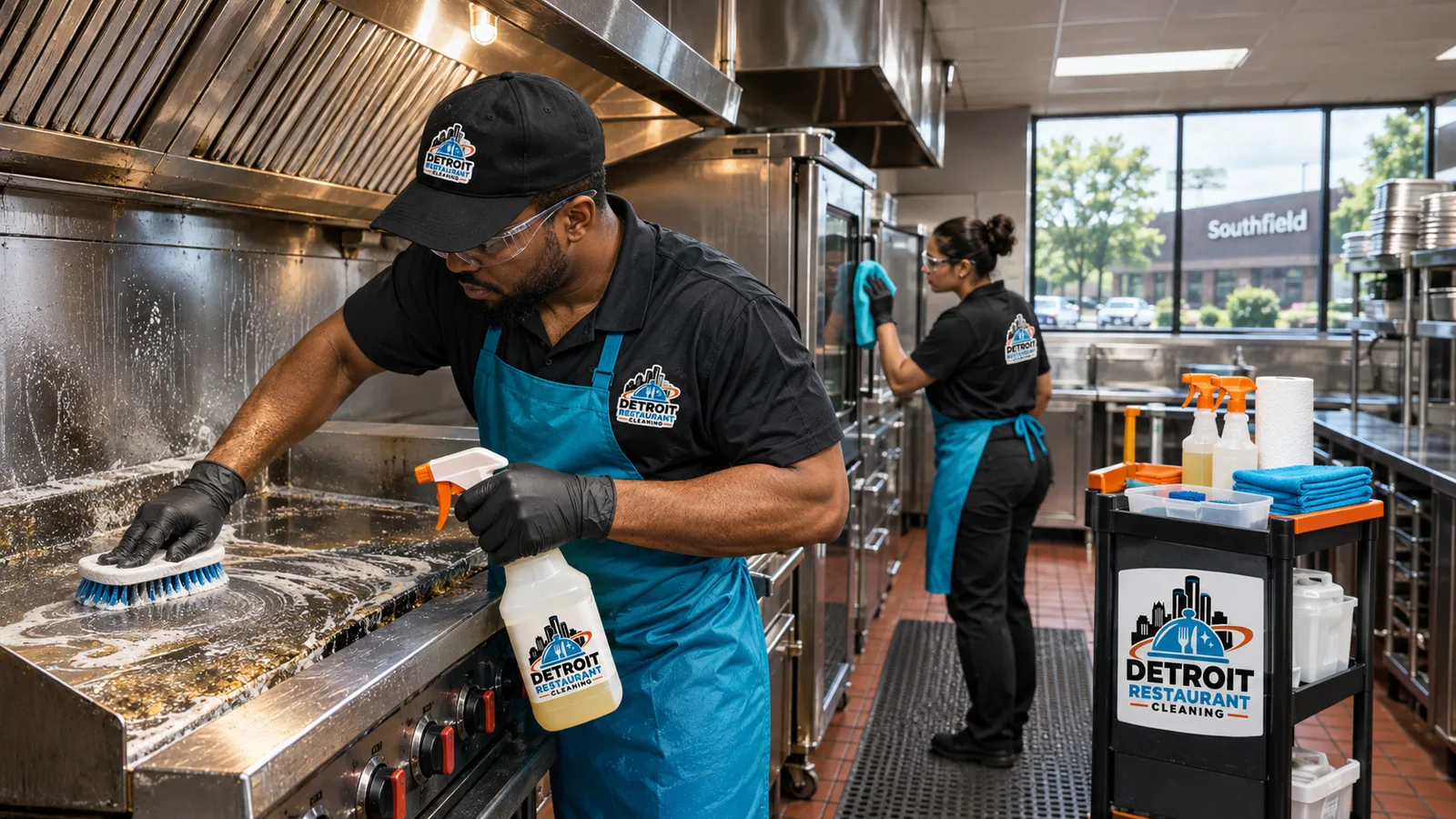
Detailed kitchen cleaning planned around active food-service operations
Restaurant Kitchen Cleaning Southfield requires more than a quick wipe of visible surfaces. Aerosolized grease settles on equipment sides, walls, pipes, conduit, shelving, and overhead structures. Dust then bonds to that film. A useful cleaning scope identifies those deposits, sets boundaries around sensitive equipment, and assigns the right method to each surface.
Detroit Restaurant Cleaning approaches the work as restaurant specialists serving Detroit, MI who understand that an active kitchen cannot be treated like an empty office. Before cleaning begins, the team reviews access, shutdown limits, equipment locations, floor drains, food-contact areas, and any surfaces that require special handling. The resulting plan can cover a focused high-dusting visit, detailed degreasing, or a broader top-to-bottom kitchen cleaning.
Southfield's restaurant market includes kitchens near office corridors and major roads such as Telegraph Road and Northwestern Highway, where service may need to fit around weekday lunches, catered events, and evening traffic. Scheduling can be arranged for a lower-activity period so the crew can reach difficult areas without disrupting normal production more than necessary.
Detailed kitchen scope
The exact checklist depends on the kitchen layout, equipment, soil level, and requested scope. Common work areas include stainless-steel equipment exteriors, prep-table legs and undersides, shelving, wall surfaces, doors, kick plates, floor edges, and accessible spaces behind or beside movable equipment. Degreasing chemistry and dwell time are selected according to the deposit and surface rather than applied as a single method throughout the room.
Cleaning may also address accessible pipes, conduit, ledges, ceiling vents, light exteriors, and structural members. These overhead areas can collect grease-bound dust that ordinary nightly cleaning does not reach. Food, utensils, smallwares, and exposed food-contact surfaces must be removed, covered, or otherwise protected before overhead work starts.
Kitchen exhaust systems require careful scope separation. Wiping an accessible hood exterior is different from cleaning the hood interior, filters, ducts, and fan as a complete exhaust system. Any proposal should state exactly which components are included so managers can coordinate specialized work when required.
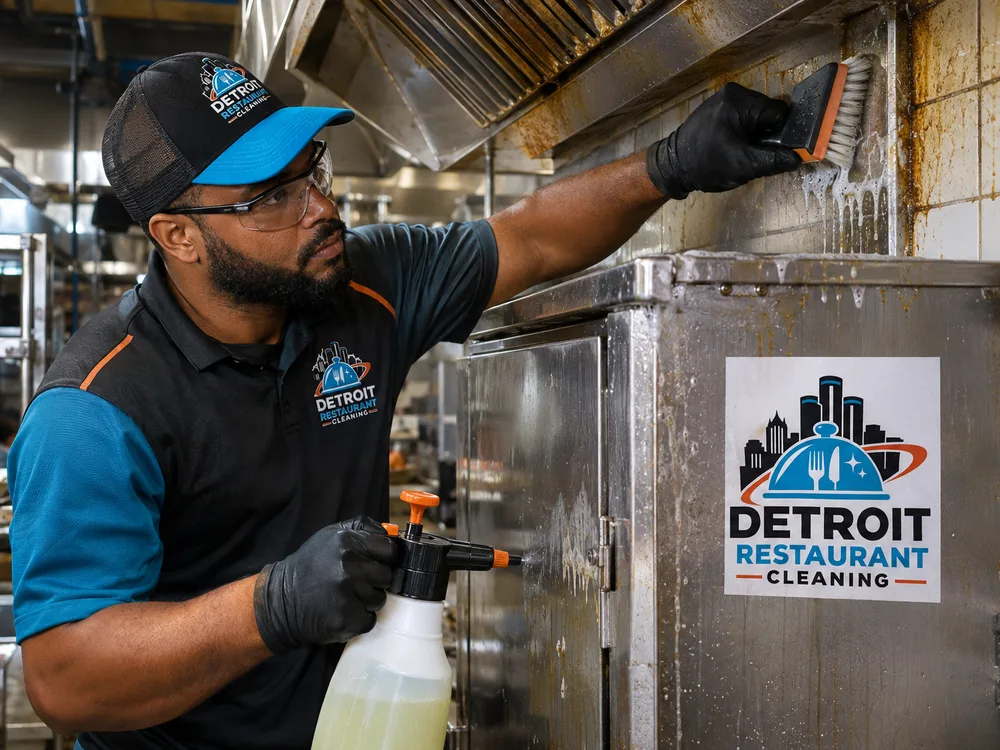
Periodic deep-cleaning scope
Grease migrates beyond the cooking surface. Cleaning can address accessible equipment exteriors, casters, sides, adjacent walls, splash areas, and the floor perimeter after the line is safely prepared.
Shelf uprights, table undersides, legs, kick plates, and lower wall areas collect soil that is easy to miss during production. Products must be removed or protected before work begins.
A detailed floor scope can include corners, edges, accessible areas under movable equipment, and buildup near floor transitions. Drain interiors are included only when the written scope says so.
Door faces, handles, push plates, cooler exteriors, and other frequently handled surfaces can be cleaned separately from overhead and heavy-degreasing work.
Accessible vents, ledges, pipes, conduit, light exteriors, and structural components may hold dust mixed with grease. These areas need controlled tools and careful protection beneath the work zone.
Narrow gaps beside equipment and spaces behind movable units can hide residue. The access plan should identify what the crew may move and what must remain connected and stationary.
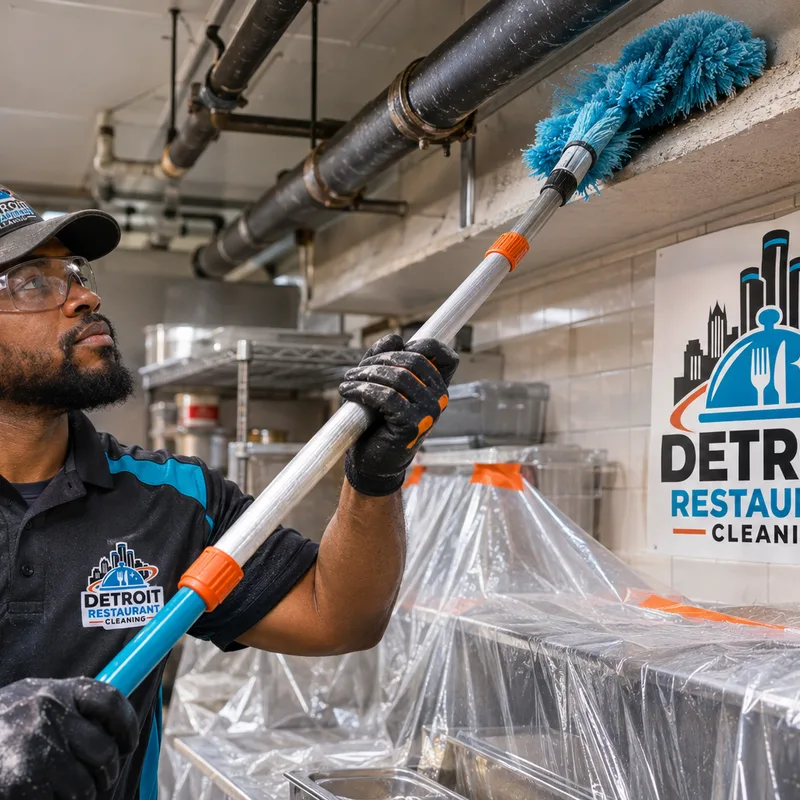
Controlled overhead cleaning
High dusting removes buildup from elevated surfaces that are outside the reach of routine wiping. In a restaurant kitchen, that may include accessible pipes, beams, vents, conduit, ledges, ceiling corners, and light exteriors. The crew determines whether extension tools, HEPA-filtered vacuuming, or approved access equipment is appropriate for the height and layout.
Dry dust should be captured rather than scattered across the room. Work generally proceeds from high surfaces toward lower ones, with the area beneath protected before cleaning begins. Heavy grease may require a separate wet-degreasing method after loose material has been removed. Electrical components, open fixtures, fire-suppression hardware, and sensitive controls require defined boundaries and may need service by the appropriate qualified provider.
Southfield restaurants experience Michigan's seasonal changes, including winter salt and tracked-in grit. That floor soil is separate from overhead grease and dust, but both can be addressed during a planned deep-cleaning window. The scope should identify which rooms, elevations, and surfaces are included instead of relying on a broad promise to clean everything.
From review to inspection
The first review identifies the cooking line, prep zones, storage areas, overhead surfaces, utility connections, access limits, and the deposits causing concern. Managers can point out problem areas and scheduling restrictions.
The plan lists included surfaces, exclusions, equipment-movement responsibilities, required shutdowns, and the expected cleaning window. It also distinguishes general kitchen work from specialized exhaust, pest-control, or equipment-repair tasks.
Food and smallwares are removed or secured. Food-contact surfaces and sensitive equipment are protected as needed. The crew establishes safe access and confirms which appliances may be moved or cleaned in place.
When high dusting is included, overhead buildup is addressed before lower surfaces. Degreasers receive suitable dwell time, residue is removed, and methods are adjusted for stainless steel, painted surfaces, tile, and other finishes.
The crew reviews the completed scope, checks edges and access points, removes protective materials, and identifies any area that could not be reached safely or required a different trade.
Budget planning
Restaurant kitchen cleaning in Southfield typically ranges from $500 to $2,500 or more per visit. A small, moderately soiled kitchen may fall near the lower end, while a large kitchen with heavy grease, extensive high dusting, or difficult equipment access can exceed the range. Final price depends on kitchen size, buildup, surface height, crew access, equipment movement, shutdown limits, and whether specialty exhaust cleaning is included. Detroit Restaurant Cleaning confirms the exact cost after reviewing the kitchen and defining the written scope.
Request a CallbackPlan before service
A good estimate should define more than the number of labor hours. It should identify the rooms and surfaces included, the expected condition of the kitchen before arrival, access requirements, and which party handles food removal or equipment shutdown. If the work must occur after service, the schedule should also account for cooling equipment, safe chemical use, drying, inspection, and reopening preparations.
Managers should ask whether overhead work is included, whether the crew can move connected equipment, and whether exhaust components are excluded. It also helps to identify fragile finishes, damaged grout, loose ceiling material, active leaks, or electrical concerns before cleaning. Cleaning cannot repair a failing surface, and aggressive scrubbing may worsen existing damage.
Detroit Restaurant Cleaning is based at 1370 Franklin St, Suite 5 in Detroit and serves food-service operations in Southfield. That Detroit base is practical for coordinating work across the nearby suburban commercial corridors while keeping the scope focused on the conditions inside each individual kitchen.
Get a written cleaning scope that identifies the surfaces, access plan, exclusions, and scheduling needs before the crew arrives.
Call for a Free QuoteScope and scheduling
A focused cleaning may take several hours, while a large or heavily soiled kitchen can require a full shift or staged visits. Equipment access, grease thickness, ceiling height, and the number of rooms affect timing. Restaurants near Southfield's busy office and road corridors often schedule work after the last service or during another low-production window.
Yes, work can be planned for an after-hours or low-activity window when scheduling permits. The manager should allow time for food removal, equipment cooldown, cleaning, drying, inspection, and setup before production resumes. The required window is confirmed after the kitchen and scope are reviewed.
High dusting can include accessible ceiling surfaces, vent exteriors, pipes, conduit, beams, ledges, and light exteriors when those items are listed in the scope. It does not automatically include opening HVAC systems, handling electrical components, or servicing fire-suppression equipment. Height and safe access determine what the crew can reach.
Movable, disconnected equipment may be repositioned when the scope and site conditions allow, but connected or heavy equipment usually remains in place unless safe movement is arranged in advance. Gas lines, electrical connections, water supplies, and refrigeration components should be handled by qualified personnel when disconnection is required.
Hood and exhaust-system cleaning is included only when the written scope specifically lists the hood interior, filters, ductwork, and fan. Cleaning visible kitchen surfaces or a hood exterior is not the same as servicing the complete exhaust path. Confirm the included components before scheduling.
The restaurant generally needs to secure food, remove smallwares from work areas, identify sensitive equipment, and provide the agreed access and shutdown conditions. Exact preparation depends on the scope. A pre-service checklist can clarify cooling time, alarm or key arrangements, utility access, and who will inspect the work.
No, some discoloration or staining may remain after removable grease has been cleaned. Heat, oxidation, worn coatings, etched metal, damaged grout, and aged sealant can permanently change a surface. The initial review helps distinguish cleanable deposits from material damage or finish wear.
Plan the next cleaning
Describe the kitchen, the areas causing concern, and your available service window. Detroit Restaurant Cleaning will help define a practical scope for degreasing, detailed cleaning, and high dusting.