Kitchen floor cleaning · Detroit

Commercial Kitchen Floor Cleaning in Detroit

Remove grease, food soil, and buildup from tile and grout with a cleaning plan fitted to your kitchen, flooring, and operating schedule.

✓ Tile and grout detailing
✓ One-time or recurring care
✓ Planned around operations
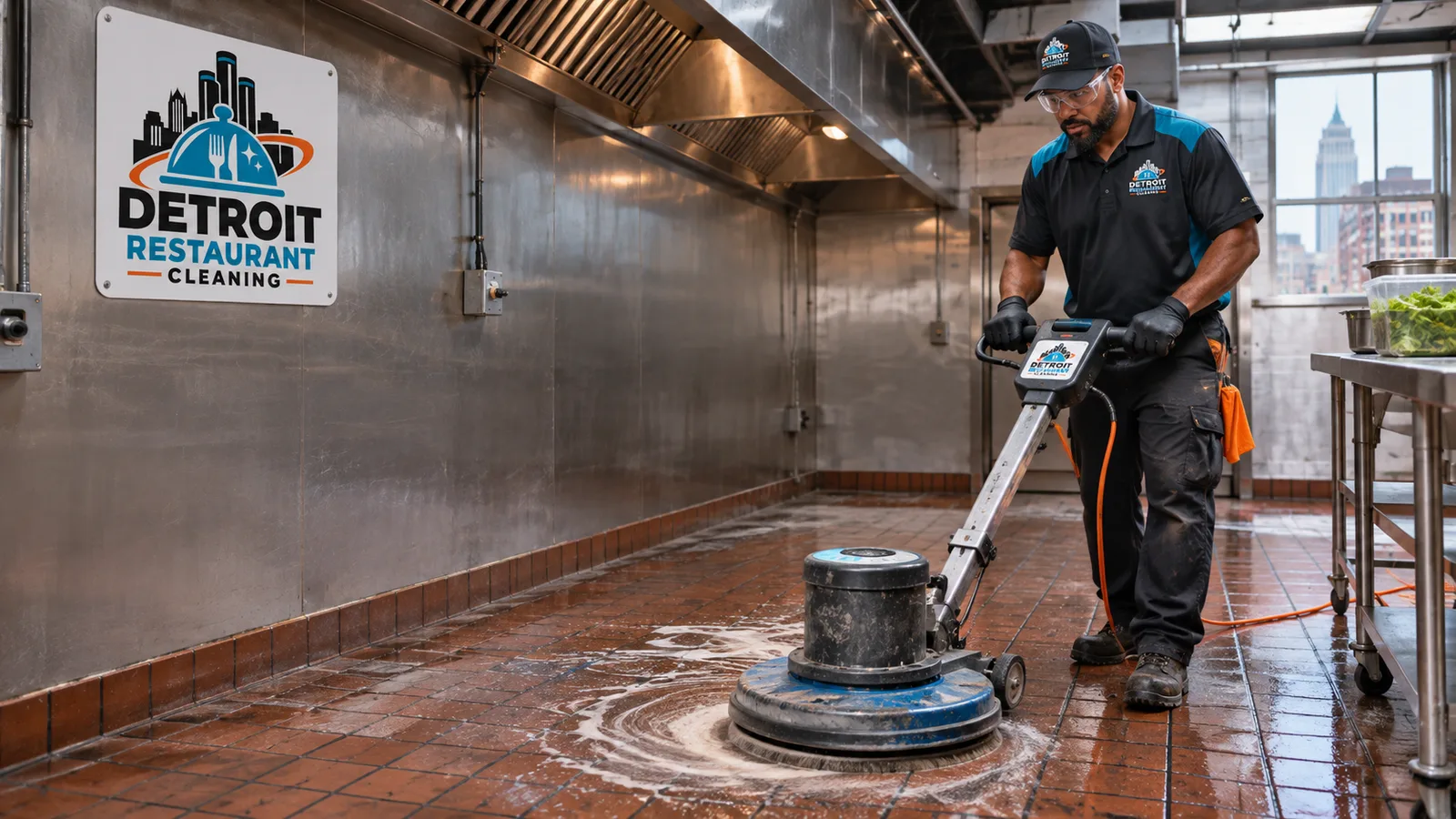
A professional technician using a rotary floor machine on quarry tile in a Detroit restaurant kitchen, with equipment and food-contact items safely moved from the work area

Controlled floor care for active commercial kitchens

A Cleaner, Safer Floor Starts With the Right Process

Commercial Kitchen Floor Cleaning targets the grease film and compacted soil that ordinary mopping can leave on tile, grout lines, edges, and hard-to-reach areas. Detroit Restaurant Cleaning evaluates the floor material, soil load, drainage, and access before selecting chemistry and equipment. The goal is a thorough cleaning without careless oversaturation or damage to surrounding fixtures.

We plan each project around the realities of an operating kitchen, and an experienced restaurant team in Detroit coordinates access, protects nearby surfaces, allows suitable dwell time for degreaser, recovers dirty solution, and leaves enough time for the floor to dry before traffic resumes. Service can be scheduled for a one-time deep cleaning or incorporated into a recurring maintenance plan.

Detroit kitchens face added floor soil during wet and snowy weather. Slush, road salt, and grit enter on footwear and delivery traffic, then mix with kitchen grease. That combination can settle into textured tile and recessed grout. Good entry mat maintenance helps, but production areas still need cleaning methods designed for cooking oils, food residue, and embedded soil.

Request a Callback

Floors, grout and detail areas

Restaurant Floor Cleaning Services by Surface and Soil Type

Restaurant Tile Cleaning

Quarry tile, ceramic tile, porcelain tile, and other common hard-floor surfaces require suitable chemistry and controlled agitation. The cleaning method is adjusted to the tile texture, finish, condition, and manufacturer guidance.

Restaurant Grout Cleaning

Grout lines sit lower than surrounding tile and collect greasy soil that flat mops may pass over. Focused agitation helps loosen buildup along grout joints, wall edges, equipment lines, and corners.

Kitchen Floor Degreasing

Commercial degreasers need the correct dilution, contact time, and agitation to work. Applying stronger chemical without regard for the surface can leave residue or harm certain materials, so product selection follows the floor and soil conditions.

Detail Cleaning Around Equipment

Edges around fryers, cooklines, prep stations, coolers, and floor-mounted equipment often need hand detailing. Movable equipment is addressed according to safe access and the agreed scope.

Floor Drain Areas

The floor immediately surrounding drains can accumulate residue in grout joints and low spots. Cleaning focuses on the accessible floor surface and drain perimeter without treating drain clearing or plumbing work as part of floor cleaning.

Recurring Floor Care

A planned schedule helps control buildup before it becomes a heavy restoration project. Frequency depends on cooking volume, menu, floor texture, cleaning routines, and the amount of delivery traffic.

Request a Callback

Deep floor degreasing

Restaurant Floor Degreasing That Goes Beyond Mopping

Mopping is useful for routine soil removal, but a mop can redistribute oily water when the solution is overloaded or the floor has deep texture. Professional restaurant floor degreasing uses a defined sequence: dry debris removal, degreaser application, dwell time, mechanical or manual agitation, soil recovery, rinsing as appropriate, and drying.

Hot-line areas usually require the most attention because aerosolized cooking oil settles near fryers, ranges, and ventilation zones. Grout joints and textured quarry tile can hold that film below the path of a mop. A rotary machine, deck brush, or other surface-appropriate tool agitates these recesses. Wet recovery equipment then removes suspended grease and soil rather than allowing it to dry back onto the floor.

Degreasers are cleaning agents, not substitutes for proper slip-resistant footwear, floor repairs, or operational safety practices. Loose tiles, failing grout, damaged coves, and standing water should be corrected separately. We identify visible concerns that may affect cleaning and discuss them before work begins.

Request a Callback
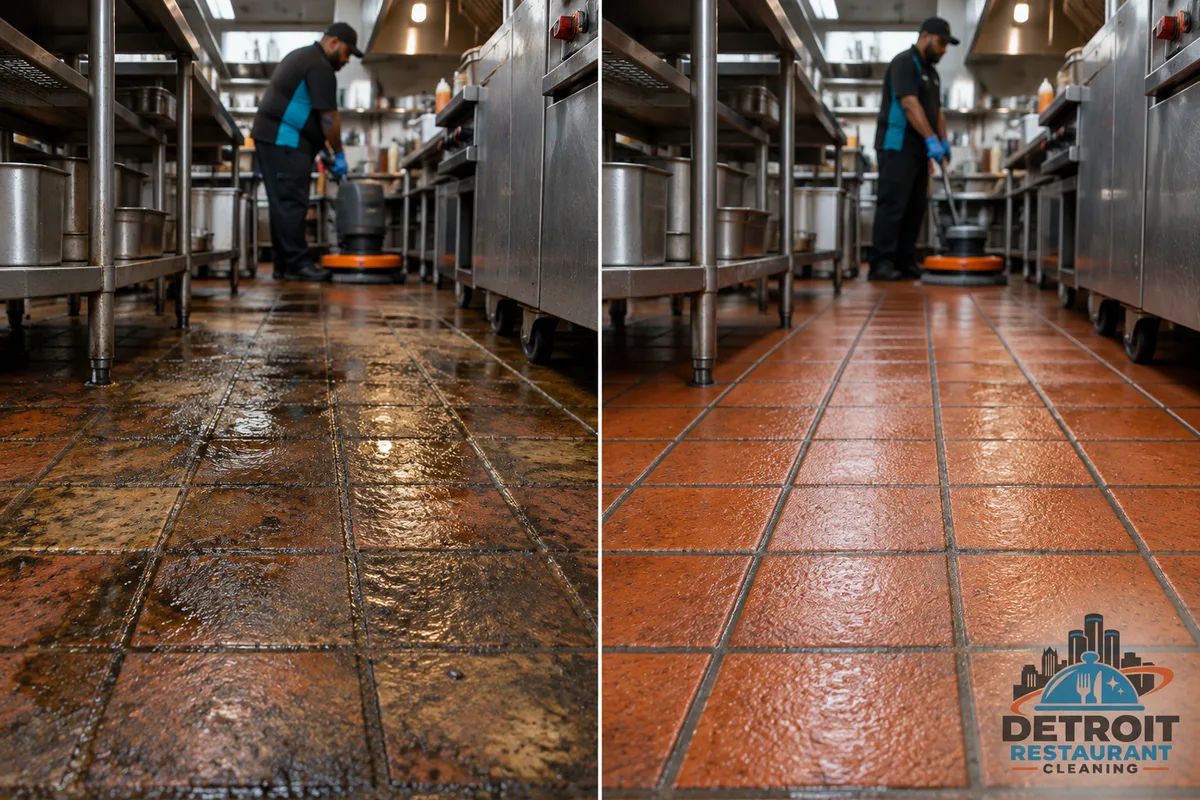
A side-by-side view of greasy grout and textured quarry tile before cleaning and the same restaurant kitchen floor after controlled degreasing and soil recovery
Focused agitation removes soil held in textured tile and recessed grout lines.

From inspection to handoff

Our Commercial Kitchen Floor Cleaning Process

  1. 01

    Inspect the Floor and Work Area

    We review the flooring type, grease concentration, grout condition, drainage, equipment access, and any areas that require special handling. The scope identifies what can be moved and what will be cleaned in place.

  2. 02

    Prepare the Kitchen

    Loose debris is removed, accessible obstacles are cleared, and nearby surfaces are protected as needed. Cleaning is coordinated outside food production whenever possible, with food and clean utensils kept away from the work zone.

  3. 03

    Apply the Correct Degreaser

    A floor-compatible cleaner is mixed and applied according to the soil load and product directions. The solution receives appropriate dwell time so it can loosen oily residue before agitation.

  4. 04

    Agitate Tile, Grout, and Edges

    The floor is scrubbed with equipment and brushes suited to its texture. Grout joints, perimeter edges, corners, and accessible areas around cooking equipment receive focused attention.

  5. 05

    Recover Soil and Rinse

    Released soil and cleaning solution are collected rather than pushed toward an unsuitable area. The floor is rinsed or neutralized when the selected product and surface require it.

  6. 06

    Inspect and Allow Drying Time

    We review the cleaned area, address remaining accessible spots within scope, and leave the floor to dry before normal traffic returns. The handoff can include practical notes for routine upkeep.

Request a Callback

Detroit scheduling and access

Commercial Floor Cleaning for Detroit Food-Service Operations

Different service areas create different cleaning demands. Greektown restaurants may have tight back-of-house layouts where access and equipment positioning require careful planning. Corktown dining rooms and kitchens can occupy adapted commercial buildings, so floor transitions and restricted service paths deserve attention. Eastern Market businesses often manage frequent receiving activity, which can carry grit and moisture into work areas. Downtown kitchens may also have shared loading access, elevators, or building rules that affect scheduling and equipment movement.

Our location at 1370 Franklin St, Suite 5 places Detroit Restaurant Cleaning near downtown food-service districts. We establish access requirements before arrival, including loading instructions, parking limitations, security procedures, and the time when cooking and dishwashing will stop. Those details matter because an occupied kitchen cannot be cleaned as though it were an empty room.

Restaurant Floor Cleaning Detroit customers can arrange service after closing, before opening, or during another approved shutdown window, subject to scheduling. The required window depends on floor area, grease load, furniture or equipment movement, recovery needs, and drying conditions. A walkthrough provides a more reliable plan than estimating solely from square footage.

Request a Callback
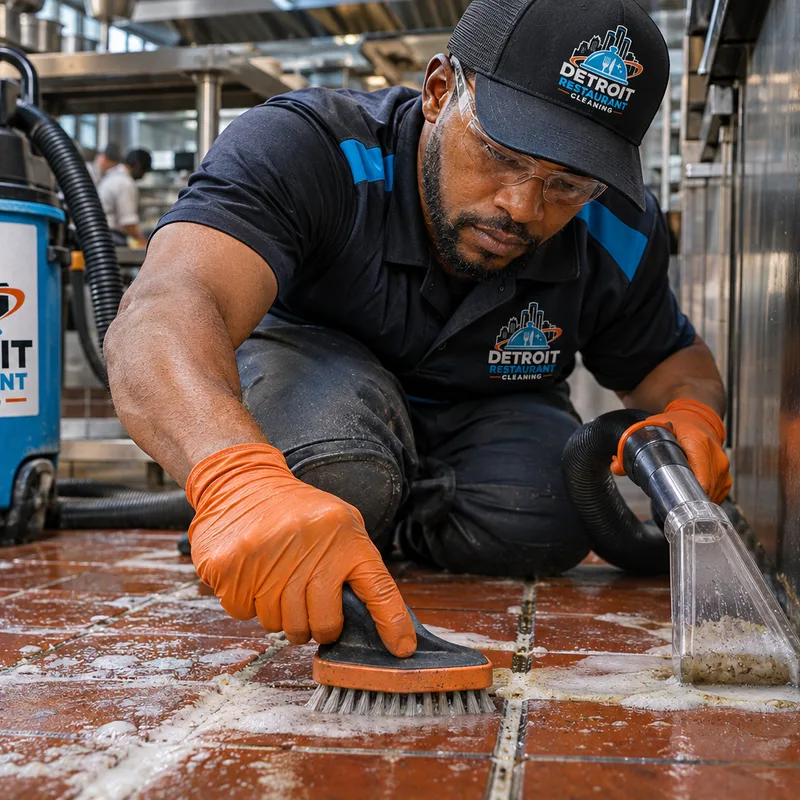
Close view of a technician brushing recessed grout joints and perimeter edges on a commercial kitchen tile floor while dirty solution is controlled for recovery
Grout joints, edges, and equipment lines require more than a flat mop pass.

Define the work before service

What a Professional Cleaning Scope Should Cover

A clear proposal identifies the rooms and surfaces included, the expected level of equipment movement, known access limits, and the cleaning method. It should also state whether dining-room flooring, walk-in floors, storage areas, stairs, or loading zones are included. These spaces are priced and planned only when they are part of the agreed work.

Floor condition affects the result. Cleaning can remove greasy soil and many surface residues, but it does not repair cracked tile, missing grout, etched finishes, permanent discoloration, or worn slip-resistant texture. Heavy buildup may also reveal older stains or damage once the surface soil is gone. Setting that distinction before service keeps the scope practical.

For recurring Restaurant Floor Cleaning Services, we can concentrate each visit on the production floor while rotating detail areas based on need. A kitchen with fryers, heavy sauté production, or continuous service may need more frequent degreasing than a lower-volume prep operation. The right interval is based on observed buildup rather than a generic calendar.

Request a Callback

Floor cleaning costs

How Much Does Commercial Kitchen Floor Cleaning Cost in Detroit?

Commercial kitchen floor cleaning in Detroit typically ranges from $300 to $1,200 per visit, while large kitchens, severe grease buildup, or extensive detail work may cost more. A small kitchen with open access is generally at the lower end; multi-area facilities and restorative cleaning are higher.

Final pricing depends on square footage, floor material, soil level, grout condition, equipment movement, water access, parking, work hours, and service frequency. A walkthrough or detailed assessment confirms the exact cost and written scope before cleaning is scheduled.

Request a Callback

Scope, access and drying

Questions Detroit Restaurant Operators Ask

How long does restaurant floor cleaning take?

A small, accessible kitchen may take a few hours, while larger floors or heavy grease buildup can require a longer shutdown window. The timeline includes preparation, chemical dwell time, agitation, soil recovery, and drying. Shared loading access, elevators, or tight back-of-house layouts in downtown Detroit buildings can also affect setup time.

Can you clean the floor without disrupting restaurant service?

Service is normally planned for a period when cooking, prep, and foot traffic can stop in the work area. After-hours or pre-opening scheduling may be available, but the kitchen must remain clear long enough for cleaning and drying. The required window is confirmed after reviewing the floor and operating schedule.

Will Restaurant Tile Cleaning remove all dark grout lines?

Professional cleaning can remove substantial grease and embedded soil, but it cannot guarantee that every grout line will return to its original color. Permanent staining, worn grout, failed sealers, and material deterioration may remain. A test area can help establish realistic expectations before the full floor is cleaned.

Do fryers and other kitchen equipment need to be moved?

Only equipment that can be moved safely and is included in the agreed scope should be repositioned. Gas-connected, hardwired, plumbed, or very heavy equipment may need to remain in place or be handled by a qualified trade. We document access limits and clean reachable floor edges without disturbing unsafe connections.

How often should kitchen floor degreasing be scheduled?

The schedule should follow the rate of grease accumulation, not a fixed rule. Fryer-heavy operations and high-volume cooklines may need professional degreasing more often than light-prep kitchens. Delivery traffic, floor texture, daily mopping practices, and winter salt or grit tracked into Detroit kitchens also influence the interval.

Can the kitchen reopen immediately after cleaning?

The kitchen should reopen only after the floor is dry and normal access has been restored. Drying time varies with ventilation, temperature, floor texture, and the amount of moisture used. Staff should keep traffic off the work area until the agreed handoff conditions are met.

Are dining-room floors included with restaurant kitchen cleaning?

Dining-room floors are included only when they appear in the written scope. Front-of-house materials often need a different method than kitchen quarry tile, particularly when the space contains wood, luxury vinyl tile, carpet, or finished concrete. Identifying each surface during the walkthrough allows the work to be priced correctly.

Tell us the floor type, approximate kitchen size, trouble spots, and preferred service window so we can prepare a practical cleaning scope.

Call for a Free Quote

Plan the next floor cleaning

Plan Your Detroit Kitchen Floor Cleaning

Arrange an assessment with Detroit Restaurant Cleaning to review grease buildup, tile and grout condition, access, scheduling, and the right maintenance interval for your operation.